Spring in North Dakota does not ease you in. One week, the ground is frozen solid, and the next, you have got inches of snowmelt moving fast with nowhere to go. For homeowners in Fargo and Grand Forks, that rapid thaw is one of the most stressful times of year for your plumbing system — and one of the most common times for preventable problems to turn into expensive emergencies.
This spring snowmelt plumbing checklist covers the four areas that matter most: your sump pump, floor drains, sewer backup risk, and outdoor hose bibs. Go through each section before the thaw hits, and you will be in a much better position than most of your neighbors.
If you would rather have a licensed plumber handle the inspection for you, schedule a spring plumbing inspection with Precision — we serve homeowners across the Fargo and Grand Forks areas with 24/7 availability.
Jump to a Section
- Sump Pump Inspection
- Floor Drain Inspection
- Sewer Backup Prevention
- Hose Bib Inspection
- When to Call a Plumber
- Frequently Asked Questions
1. Sump Pump Inspection: Your First Line of Defense Against Snowmelt Flooding
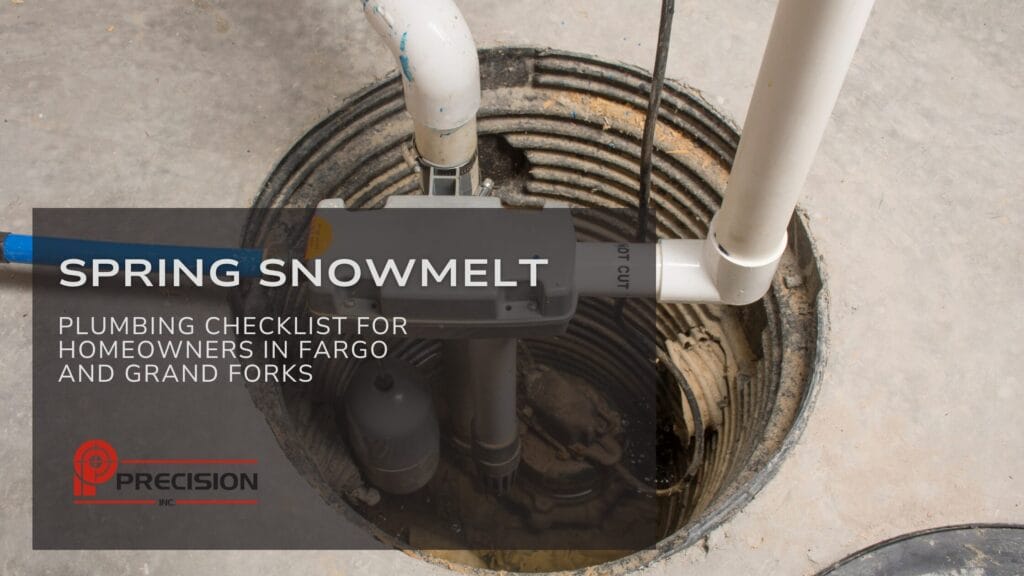
If there is one item on this spring plumbing checklist you absolutely cannot skip, it is your sump pump. During heavy snowmelt, water volume around your foundation can spike dramatically in a matter of hours. A sump pump that is even slightly underperforming can fail right when you need it most — and by the time you notice, the damage is already done.
The good news: testing your sump pump takes less than ten minutes and requires no special tools. Here is how to do it, and what to watch for.
How to Test Your Sump Pump Before Spring
Start by finding your sump pit. It is typically in the lowest corner of your basement or crawl space, covered by a lid. Remove the lid and check inside — the pit should be clean, with no debris, mud, or standing water left over from a previous event. Next, do a manual float test: pour a slow, steady bucket of water into the pit until the float rises and the pump activates. The pump should turn on promptly, drain the water completely, and shut itself off automatically. If it hesitates, runs without moving water, makes a grinding noise, or does not shut off on its own, that pump needs service before snowmelt season begins.
Precision’s residential plumbing team handles full sump pump inspections, testing, and replacement for homeowners across the Fargo and Grand Forks areas. If your pump is more than seven years old, it is worth having a professional take a look — proactive replacement is almost always less expensive than an emergency call during an active flood event.
Sump Pump Spring Checklist
- Test the float switch by slowly pouring a bucket of water into the pit
- Listen for grinding, rattling, or humming without water movement
- Confirm the pump shuts off automatically once the water level drops
- Inspect the discharge line — it should be clear of ice and debris, and draining away from the foundation
- Check the power cord and outlet — never run a sump pump on an extension cord
- Test your battery backup or water-powered backup system if you have one
- Clear any sediment, gravel, or debris from the bottom of the pit
- Note the age of your pump — most last 7 to 10 years
Should You Have a Battery Backup Sump Pump?
If you do not already have a backup system, spring is the right time to add one. Spring storms in the Fargo and Grand Forks area frequently knock out power — and that is exactly when snowmelt is at its peak, and your sump pump is working hardest. A battery backup system keeps the pump running through outages and is one of the most practical investments you can make for your basement.
Precision’s annual plumbing maintenance plan includes a sump pump inspection as part of a whole-home plumbing check. It is a smart investment if you want consistent, year-round peace of mind rather than reactive calls when something goes wrong.
2. Floor Drain Inspection: Do Not Let These Dry Out Before Snowmelt
Floor drains are easy to forget about. They sit quietly and do nothing obvious most of the year. But during spring snowmelt, they can be critically important — and a clogged or dried-out floor drain in your basement or utility room can cause serious problems when water starts moving fast.
Where to Find Your Floor Drains
- Basement utility area (near the furnace or water heater)
- Laundry room
- Attached garage
- Any mechanical or storage room below grade
The Drain Trap Problem: Sewer Odors and Spring Backup Risk
Every floor drain has a trap — a curved section of pipe that holds a small pool of water to block sewer gases from entering your living space. In drains that go unused all winter, that water evaporates. When the trap dries out, you lose the seal. You may start noticing a sewer smell in the basement, especially in spring when changing air pressure can push gases upward through the system.
The fix is simple: pour about a gallon of water down each floor drain to refill the trap. Add a small splash of vegetable oil to slow future evaporation. Do this before snowmelt begins so each drain is ready to handle water when it shows up.
Floor Drain Spring Checklist
- Locate all floor drains and remove the grates
- Clear out any debris, sediment, or buildup around and below the grate
- Pour water into each drain slowly — confirm it flows freely without backing up
- Add vegetable oil to traps in rarely used drains to slow evaporation
- Check for slow drainage, which can signal a partial downstream blockage
- Look around each drain for past staining, water marks, or mineral deposits indicating a previous backup
If a floor drain gurgles when you run other fixtures — flushing a toilet, running the laundry, or using a basement sink — that is a sign of a blockage or venting issue in the main line, not just the drain itself. That warrants a call to a licensed plumber before snowmelt season starts.
3. Sewer Backup Prevention: The Spring Risk You Cannot Afford to Ignore
Of everything on this spring plumbing checklist, sewer backups are the most expensive and most unpleasant outcome. They can send raw sewage into your basement, create serious health hazards, and result in damage that insurance may not fully cover. The frustrating part is that many of them are entirely preventable — especially the ones caused by spring snowmelt.
Why Snowmelt Increases Sewer Backup Risk in Fargo and Grand Forks
When the ground becomes saturated during rapid snowmelt, water finds every possible path to move. If your sewer lateral — the pipe running from your home to the municipal main — has any cracks, separated joints, or tree root intrusions, groundwater seeps in through those gaps and fills the pipe. This is called infiltration and inflow (I&I). Even if you are not using any water inside the house, the line can become overloaded with groundwater. If the city’s main sewer system is also overwhelmed, sewage can flow backward toward your home.
This is a well-documented issue in older neighborhoods across Fargo and Grand Forks, where aging infrastructure and mature tree roots are common. If your home is more than 25 to 30 years old and has never had a sewer scope inspection, spring is the right time to schedule one. Precision’s plumbing team can run a camera through your sewer lateral to show you exactly what is happening inside the pipe — before you find out the hard way.
For more on protecting your home during North Dakota’s volatile spring weather, see our related post: Protecting Your Home’s HVAC and Plumbing During Warm Spells and Freeze Risks in North Dakota.
Sewer Backup Prevention Checklist
- Know where your main sewer cleanout is located (typically a capped pipe near the foundation, in the yard, or in the basement floor)
- Watch for early warning signs: multiple slow drains at once, gurgling toilets, sewage odor in the basement, or water appearing at floor drains
- Only flush toilet paper — no wipes (even “flushable” ones), paper towels, hygiene products, or grease
- Schedule a sewer scope inspection if your home is older and has never had one
- Ask your plumber about a backwater valve if you do not already have one
- Have tree roots near your sewer line treated or cleared before they grow further through the pipe wall
What Is a Backwater Valve and Do You Need One?
A backwater valve (also called a backflow prevention valve) is installed in your sewer line and automatically closes if sewage tries to flow backward into your home during a main line overload. It is one of the most cost-effective protections available for homeowners in areas with aging sewer infrastructure. If you have experienced a backup before, or if you live in an older Fargo or Grand Forks neighborhood, this is absolutely worth discussing with your plumber.
Contact Precision to ask about backwater valve installation — our team can assess whether your home is a good candidate and walk you through the options.
4. Hose Bib Inspection: Check These Before You Turn Anything On
Outdoor hose bibs — the exterior faucets on the side of your home — are one of the most overlooked items on any spring plumbing checklist and one of the most common sources of hidden water damage. A hose bib that was not properly winterized last fall can have a cracked pipe sitting silently behind your wall all winter. You will not know about it until you turn the water back on in the spring, and by then, water may already be flowing inside the wall or into the floor system.
What Causes Hose Bib Freeze Damage?
When outdoor temperatures drop below freezing, water left sitting in the pipe between the exterior bib and the interior shutoff valve can freeze and expand, cracking the pipe. In homes with standard hose bibs, this happens if the interior shutoff was not closed and the bib not drained before winter. In homes with frost-free bibs, it can still happen if a hose was left attached and trapped water in the spout. Either way, the crack sits hidden behind the wall until you apply pressure — which is the moment you open the valve for the first time in spring.
How to Inspect Hose Bibs Before the Season
Before opening any outdoor faucet, start with a visual check of the exterior. Look for physical damage to the bib itself, frost cracking in the siding around it, or staining that could indicate a past slow leak. Then, with no hose attached, turn the water on slowly. Go inside and find the supply pipe that feeds it — usually visible in an unfinished basement or mechanical room. Feel along the pipe and look for any dripping or moisture while the bib is running outside. If you find water inside while the bib is on, shut it off immediately and call a plumber. You likely have a crack behind the wall.
Hose Bib Spring Checklist
- Visually inspect all exterior hose bibs for cracks, frost damage, or corrosion
- Confirm last fall’s winterization was completed (interior shutoff closed, exterior bib drained)
- Turn each bib on slowly without a hose attached
- Check inside at the supply line while the bib runs — look and feel for moisture or dripping
- Test the flow rate — reduced pressure can indicate a partial freeze fracture blocking the pipe
- Once confirmed working, attach hoses and check connections for leaks at the threads
- If you have frost-free bibs, confirm they drain on their own within seconds of shutting off
- Never leave a hose attached to any outdoor faucet overnight while temperatures are still dropping below freezing
Precision handles outdoor faucet repair and replacement as part of our standard residential plumbing services in Fargo and Grand Forks. If you find a problem, do not try to patch a cracked pipe inside a wall yourself — improper repairs can create bigger moisture and mold problems down the road.
When to Call a Plumber Instead of DIYing It
Several items on this checklist are straightforward homeowner tasks. Others are warning signs that a licensed plumber needs to be involved before things get worse. Call Precision if you notice any of the following:
- Your sump pump does not activate, runs continuously, or makes grinding or rattling noises
- Multiple drains in your home are slow at the same time
- Toilets gurgle or bubble when other fixtures run
- There is a persistent sewage odor in the basement, even after refilling the floor drain traps
- Water appears around a floor drain without you running any water
- A hose bib shows reduced flow, or you find moisture inside near the supply line
- Your home is older and has never had a sewer scope or main line camera inspection
- You experienced a sewer backup or basement flooding during a previous snowmelt season
Spring plumbing emergencies in Fargo and Grand Forks tend to cluster around the same two-week window when snowmelt peaks. Scheduling a preventive inspection in February or early March — before that window — is almost always faster and significantly less expensive than calling during an active event.
Precision serves homeowners throughout the greater Fargo area and Grand Forks with licensed, insured plumbers available 24 hours a day, 7 days a week. Book your spring plumbing inspection today.
Frequently Asked Questions: Spring Plumbing and Snowmelt
How often should I test my sump pump?
You should test your sump pump at least twice a year — once in early spring before snowmelt and once in fall before the ground freezes. Pour a bucket of water into the sump pit until the float rises and the pump activates. It should drain the water fully and shut off on its own. If your pump is seven or more years old, consider a professional inspection through Precision’s annual plumbing care plan.
What causes sewer backups during spring snowmelt in North Dakota?
Spring sewer backups in Fargo and Grand Forks are most commonly caused by groundwater infiltrating cracked or aging sewer lateral pipes, as saturated soil puts pressure on the system. Tree roots that have grown into pipe joints over the winter make this significantly worse. Municipal sewer mains can also become overwhelmed during rapid melt events, causing sewage to flow back toward connected homes.
How do I know if my hose bib froze and cracked over winter?
Turn the hose bib on slowly without a hose attached, then go inside and check the supply pipe that feeds it. If you see any moisture or dripping while the bib is running outside, the pipe has likely cracked from freezing. Shut the water off right away and contact a plumber. Water inside a wall cavity causes mold and structural damage quickly. Precision’s plumbing team can diagnose and repair freeze-damaged hose bib pipes in Fargo and Grand Forks.
Why does my basement floor drain smell bad in spring?
If a floor drain goes unused over winter, the water in the trap evaporates, breaking the seal that blocks sewer gases. Pour a gallon of water down the drain to restore the trap and add a little vegetable oil to slow future evaporation. If the smell continues after refilling the trap, it may indicate a blockage or venting issue in the drain line that needs professional attention.
What is a backwater valve, and should I have one in North Dakota?
A backwater valve is installed in your sewer line and automatically closes if sewage tries to flow backward into your home during a main line overload. It is strongly recommended for homes in older Fargo and Grand Forks neighborhoods, homes that have experienced backups before, and any home with a below-grade basement. Contact Precision to discuss whether a backwater valve is right for your home.
When should I schedule a spring plumbing inspection in Fargo or Grand Forks?
The best time is late February or early March — before peak snowmelt begins. This gives your plumber time to identify and address any issues before the water starts moving fast. Precision offers spring plumbing inspections for homeowners in the Fargo area and Grand Forks. Call before the rush and get it done right.
Does Precision offer a spring maintenance plan?
Yes. Precision’s annual plumbing care agreement includes a whole-home plumbing inspection, guaranteed rates, and proactive service designed to catch problems like sump pump wear, drain issues, and hose bib damage before they become emergencies. It is one of the most practical investments a Fargo or Grand Forks homeowner can make heading into a heavy snowmelt season.
Do Not Wait for the Water to Start Rising
Spring snowmelt moves fast in North Dakota. The homeowners who come through it without a plumbing problem are almost always the ones who took time to check things before the thaw — and called a professional when something looked off.
If you want a licensed plumber to go through this checklist for you, Precision is ready. We offer spring plumbing inspections, sump pump testing and replacement, sewer line scoping, backwater valve installation, and hose bib repair throughout the Fargo and Grand Forks areas.
Schedule your spring plumbing inspection with Precision today — before the rush hits.
You can also learn more about our team, browse our full range of plumbing services, or check out more home maintenance tips on the Precision blog.
Precision serves homeowners and businesses in Fargo, West Fargo, Grand Forks, and the surrounding communities. For plumbing emergencies, call 701-238-1753 — available 24/7.