If you live in Fargo, West Fargo, or Grand Forks, your sump pump is legally required to discharge outside during spring and summer. Every one of these cities has a hard deadline for making the switch, and missing it can lead to sewer backups, basement flooding, municipal fines, and raw sewage problems for your entire neighborhood.
With Grand Forks homeowners facing an April 30 deadline and many homeowners still unsure what the rule actually means, this guide walks through everything you need to know. What the switch is, why it matters, the deadline for every city, and exactly what to do if you’re running late.
What Is the Sump Pump Discharge Switch Rule?
During the winter, most cities in our region allow homeowners to discharge sump pump water into the sanitary sewer system. That’s the same system that handles wastewater from your toilets, sinks, and showers. In freezing temperatures, discharging outside isn’t practical because the water would freeze on sidewalks and create hazards.
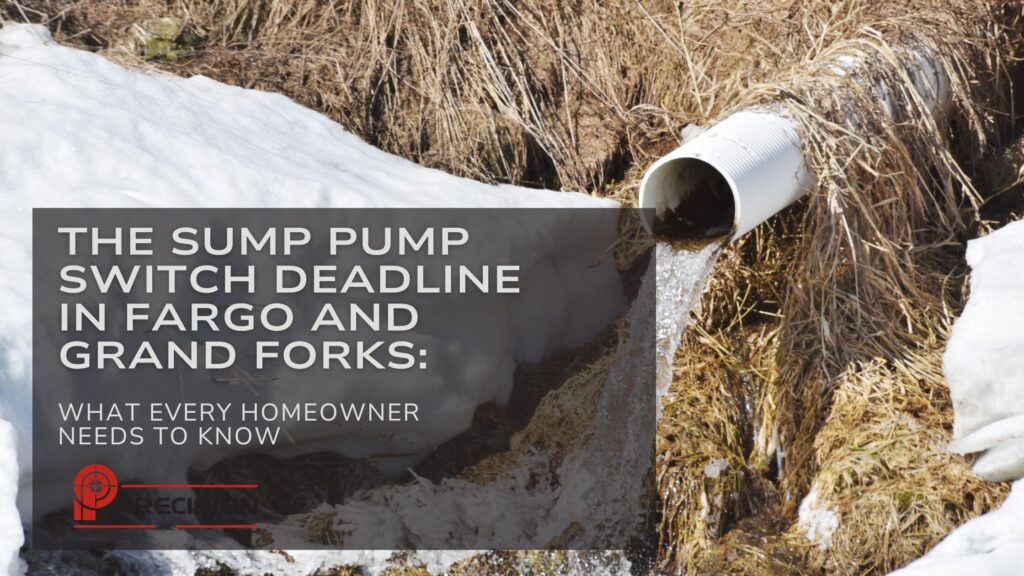
Once spring arrives, the rule flips. Homeowners must switch their sump pump discharge line so water drains outside, either directly onto the ground away from the foundation, through a buried line to the curb, or into the municipal storm sewer system, which is separate from the sanitary sewer and drains directly into the Red River.
According to the City of Fargo Water Reclamation Department, the rule exists because the sanitary sewer system simply isn’t built to handle the volume of water a neighborhood’s worth of sump pumps produce during spring snowmelt.
Sump Pump Switch Deadlines by City
Every city has its own specific deadline. Here’s where each one stands.
Fargo
Fargo’s sump pump switch deadline is March 31. From March 31 through October 1, residential sump pumps must discharge into the storm sewer system, not the sanitary sewer. Acceptable methods include a direct connection to a main storm sewer line, discharging onto the ground at least 20 feet from the home, or running a buried line to the curb.
Fargo residents can apply for a seasonal waiver through the City of Fargo Sump Pump Program that allows sanitary sewer discharge from October 1 through March 31.
West Fargo
West Fargo residents had until April 15 to switch. The city runs a Sump Pump Program that requires residents to complete a variance form to discharge into the sanitary sewer between October 15 and April 15. There is a $5 per month charge for participating in the program, added to your utility bill year round.
Grand Forks
Grand Forks homeowners have until April 30 to switch their sump pumps to outdoor discharge. If you’re in Grand Forks and haven’t made the switch yet, the clock is ticking. You have a narrow window before the deadline hits and spring snowmelt pressure peaks.
Why the Switch Actually Matters
The deadlines aren’t arbitrary. They exist because of how local sewer infrastructure is built.
The Sanitary Sewer Can’t Handle the Volume
Your city’s sanitary sewer is designed to handle household wastewater. Toilets, showers, dishwashers, and laundry. When dozens or hundreds of sump pumps in a neighborhood discharge into that same system during snowmelt, the volume overwhelms lift stations and treatment plants almost immediately.
Sewer Backups Get Pushed Into Homes
When the sanitary sewer gets overloaded, it backs up. That backup doesn’t just stay at the treatment plant. It pushes up through floor drains, basement toilets, and shower drains in homes across the neighborhood. Even if you followed the rule and discharged outside, your neighbor’s noncompliant sump pump can cause a backup that floods your basement with raw sewage.
Untreated Sewage Can Reach Local Waterways
Keeping a sump pump connected to the sanitary system during spring and summer can quickly overload the sewer system, which can result in backups and lead to the discharge of raw sewage into the storm water system. That storm water system drains directly into the Red River, meaning untreated sewage can end up in the same river that supplies the region’s drinking water.
You Could Lose Your Waiver or Face Fines
Repeated noncompliance can result in municipal fines, loss of your seasonal waiver privileges, and required inspections at your own expense. The cities take this seriously because the consequences of widespread noncompliance are severe.
What Happens If You Don’t Switch in Time?
The risks fall into three categories.
1. Your Home Floods
A sump pump discharging into a backed-up sanitary sewer can’t actually remove water from your basement. The pump runs, but the water has nowhere to go, so it overflows the pit and floods your basement just as fast as snowmelt pushes water in through the foundation.
2. Sewage Backs Up Through Your Floor Drains
This is the worst-case scenario. When the sewer system gets overloaded, sewage can flow backward through the path of least resistance, which is often the basement floor drain. Cleanup after a sewage backup typically costs thousands of dollars and can permanently damage flooring, drywall, and personal property.
3. You Get Hit With Fines or Lose Your Waiver
Fargo, West Fargo, and Grand Forks all have the authority to inspect sump pump connections, issue fines for noncompliance, and revoke seasonal waivers. Losing your waiver means you can’t legally discharge into the sanitary sewer during the next winter either, which creates a permanent problem.
How to Switch Your Sump Pump from Indoor to Outdoor Discharge
For most homeowners, switching the discharge involves three steps. If you have a professionally installed two-way valve, the process is straightforward. If your setup is older or non-standard, call a plumber.
Step 1: Identify Your Discharge Configuration
Look at the pipe coming off the top of your sump pump. There are two common setups in older Fargo and Grand Forks homes.
- Two-way valve: A Y-shaped fitting with a manual valve that routes water either outside or to the sanitary sewer. This is the easiest type to switch.
- Permanent single-line setup: A single pipe that runs only to the sanitary sewer or only outside. Switching this type requires plumbing work.
Step 2: Switch the Valve or Redirect the Discharge
If you have a two-way valve, close the indoor discharge line and open the outdoor line. If you have a permanent setup going to the sanitary sewer, you’ll need a plumber to add a discharge line that routes outside.
Step 3: Check That Water Is Flowing Away From the Home
Once you’ve switched the discharge, test the pump by pouring a bucket of water into the sump pit. Watch where the water exits. It should drain at least 20 feet from your foundation, not into a window well, not onto a sidewalk, and not toward your neighbor’s property. If the discharge creates standing water near your foundation, the water will recirculate back into your sump pit, which forces the pump to run constantly and shortens its lifespan significantly.
Common Sump Pump Discharge Problems to Watch For This Spring
Even if you’ve switched your discharge correctly, these are the issues that cause the most homeowner emergencies during peak snowmelt.
Frozen or Blocked Discharge Lines
A partially frozen discharge line can trap water inside and cause the pump to run continuously without actually moving water. Check your discharge point after the first few warm days to make sure water is flowing freely.
Discharge Pointed Toward the Foundation
If the outdoor discharge is too close to the house or pointed back toward it, the water just drains right back into your sump pit. The pump will cycle every few minutes and burn out years ahead of schedule.
Pump Running Constantly
If your sump pump is running nonstop during snowmelt, it’s either undersized for the water volume, has a stuck float switch, or is fighting a discharge problem. If you’ve noticed your sump pump running constantly, that’s a warning sign worth addressing before peak melt hits.
No Battery Backup
Spring storms in our region frequently knock out power, often at the exact moment snowmelt is peaking, and your pump is working hardest. A battery backup system keeps the pump running through outages and is one of the highest-value upgrades you can make to your home.
Old or Undersized Pump
Most residential sump pumps last 7 to 10 years. If yours is older than that and you haven’t had it inspected, this is the year to do it. Proactive replacement always costs less than emergency service during an active flood event.
When to Call a Professional
DIY discharge switching works for homeowners with a standard two-way valve setup and a pump that’s operating normally. Call a licensed plumber if any of the following apply.
- Your sump pump discharge line runs only to the sanitary sewer with no outdoor option
- Your pump is more than 7 years old and hasn’t been inspected recently
- You’ve had sewer backups or basement flooding in previous springs
- You’re unsure whether your current discharge configuration is compliant
- You want to install a backwater valve to prevent future sewer backups
- You want a battery backup system installed before peak snowmelt
Precision Plumbing has served Fargo and Grand Forks for years with expert sump pump installation and repair and full plumbing service. Our team can inspect your discharge setup, verify compliance with your city’s ordinance, test your pump’s performance under load, and install backup systems before the next big melt.
Frequently Asked Questions About Sump Pump Discharge in Fargo and Grand Forks
What is the sump pump deadline in Fargo?
Fargo’s deadline is March 31. From March 31 through October 1, sump pumps must discharge outside, either to the storm sewer, to the ground at least 20 feet from the home, or through a buried line to the curb.
What is the sump pump deadline in Grand Forks?
Grand Forks homeowners have until April 30 to switch sump pump discharge to outside.
What happens if I don’t switch my sump pump by the deadline?
You risk sewer backups, basement flooding, municipal fines, and losing your seasonal waiver. Your noncompliance can also cause sewer backups for neighbors.
Can I discharge my sump pump onto the sidewalk?
No. Discharging onto sidewalks or streets is prohibited in Fargo, West Fargo, and Grand Forks because it creates slip hazards, ice buildup, and property damage.
How far from my house should my sump pump discharge?
At least 20 feet. The further from the foundation, the less likely the water is to seep back in and cause the pump to short cycle.
Do I need a permit to switch my sump pump discharge?
No permit is needed for the seasonal switch itself. Permits and variance forms are only required if you want to discharge into the sanitary sewer during winter.
How do I know if my sump pump is working properly?
Pour a bucket of water slowly into the sump pit. The pump should turn on quickly, drain the water within seconds, and shut off automatically. If it hesitates, runs without moving water, grinds, or doesn’t shut off on its own, it needs service.
Should I install a backwater valve?
A backwater valve is strongly recommended for older Fargo and Grand Forks neighborhoods, homes that have experienced backups before, and any home with a finished basement. It automatically closes if sewage tries to flow backward into your home during a main sewer overload.
Don’t Wait for the Flood to Find Out
Spring snowmelt doesn’t arrive gradually around here. It comes fast, often with a rainstorm layered on top, and a sump pump that’s even slightly off can fail at exactly the wrong moment. If you haven’t switched your discharge, haven’t tested your pump, or haven’t had your system inspected in the last few years, now is the time.
Precision Plumbing offers complete sump pump inspections, discharge compliance checks, backwater valve installation, and full spring plumbing service across Fargo and Grand Forks. Schedule your spring sump pump inspection today, before the next big melt arrives.