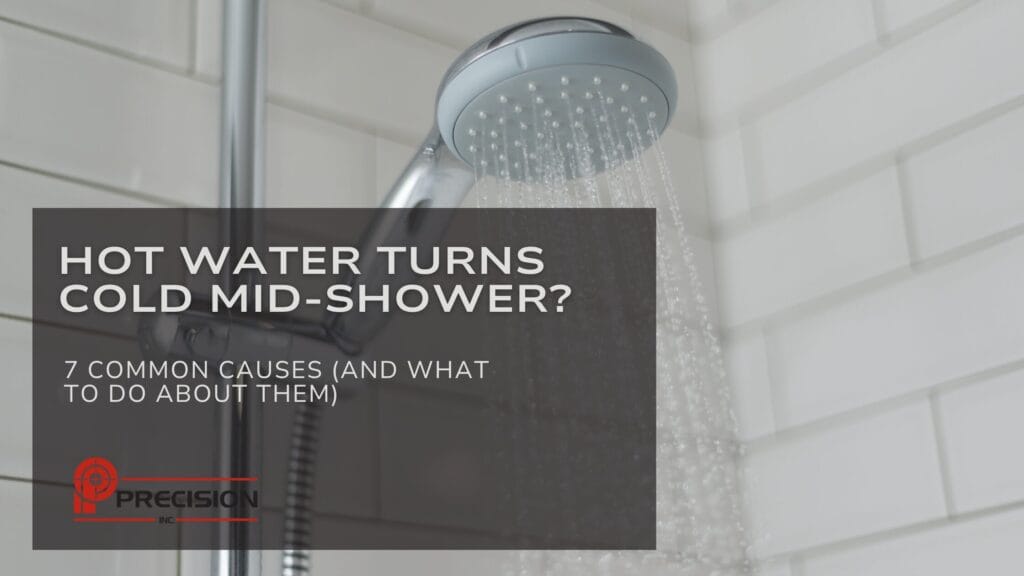
You’re mid-shampoo. The water is perfect. Then, without warning, it goes cold. If this is happening regularly in your Fargo or Grand Forks home, you’re not imagining things. This is one of the most common plumbing complaints we hear, and the good news is it’s almost always fixable once you know what’s causing it.
Here are the seven most common reasons hot water runs out mid-shower and what you should do about each one.
1. A Broken or Deteriorated Dip Tube
This is the most common culprit, and one most homeowners have never heard of.
Your water heater has a plastic tube called a dip tube that directs incoming cold water to the bottom of the tank, where it gets heated before rising to the top for use. When that tube breaks, cracks, or deteriorates, cold water gets dumped directly into the top of the tank, right where the hot water is waiting to go to your shower.
The result? Cold water mixes with hot before it ever reaches you, and your shower goes lukewarm or cold fast.
How to spot it:
Small white or gray plastic flecks coming out of your faucets or showerhead are a tell-tale sign. The dip tube is literally breaking apart inside your tank.
What to do:
A plumber can replace the dip tube without replacing the entire water heater in most cases. If your unit is older, it may be worth evaluating whether a full water heater replacement makes more sense.
2. Sediment Buildup at the Bottom of the Tank
Over time, especially in areas with hard water like Fargo and Grand Forks, minerals like calcium and magnesium settle at the bottom of your water heater tank. This layer of sediment acts as insulation between the burner and the water, making it much harder for your heater to do its job efficiently.
The more buildup there is, the less hot water your tank can produce and the faster you run out.
Warning signs of sediment buildup:
- Popping, rumbling, or banging sounds from your water heater
- Longer wait times for hot water
- Noticeably shorter hot water duration
- Higher energy bills with no other explanation
What to do:
Annual water heater flushing removes sediment and extends the life of your unit significantly. If it’s been years since yours was serviced, a plumbing inspection can assess the damage and recommend whether flushing or replacement is the right call.
3. Your Water Heater Is Undersized for Your Household
This one isn’t a malfunction. It’s a capacity mismatch. If your household has grown, or if you’ve recently added a bathroom, your existing water heater may simply not be big enough to keep up with demand.
Standard tank water heaters are sized for specific household loads. A 40-gallon tank works fine for two people but can struggle with a family of four or five, especially if multiple showers, laundry, or dishwasher use overlap.
General sizing guide:
- 1-2 people: 30-40 gallon tank
- 3-4 people: 40-50 gallon tank
- 5+ people: 50-80 gallon tank, or a tankless system
Tip: If you’re tired of fighting over who showers first, a tankless water heater heats water on demand, so you never actually run out. They’re a popular upgrade for larger households and are worth the investment if capacity is a recurring issue.
4. A Faulty Thermostat on Your Water Heater
Your water heater has one or two thermostats that tell the heating element what temperature to maintain. If a thermostat fails or gets stuck, your tank may not heat water to the right temperature, or may stop heating it partway through the cycle.
Electric water heaters typically have two thermostats (upper and lower). If the upper thermostat fails, the water may start hot but go cold quickly. If the lower thermostat fails, recovery time after use slows way down.
What to do:
Thermostat replacement is a relatively simple repair. A licensed plumber can test both thermostats and replace the faulty one without touching the rest of the unit. Schedule a plumbing repair call if you suspect this is the issue.
5. A Crossover Issue in Your Plumbing
This one is less common but important to know about. A hot/cold crossover happens when cold water leaks into your hot water line, usually through a faulty single-handle faucet, a failing mixing valve, or a malfunctioning pressure-balancing cartridge.
When this happens, even if your water heater is working perfectly, cold water is constantly bleeding into your hot supply. The shower may start warm but never get fully hot, or may go cold unexpectedly when another fixture turns on.
How to test for it:
Turn off all cold water to your home at the main shutoff. Then open a hot water faucet. If water continues to flow, you likely have a crossover issue somewhere in your plumbing.
Crossover issues are often misdiagnosed as a failing water heater. A plumbing repair professional can trace the crossover point and fix it before you invest in unnecessary equipment.
6. The Temperature Is Set Too Low
It sounds simple, but many homeowners don’t realize their water heater’s thermostat has been bumped down, or was never set correctly to begin with. The U.S. Department of Energy recommends 120°F as a standard setting, but if yours is set lower, your shower may run out of perceived hot water faster than expected.
On the flip side, setting it too high (above 140°F) creates a scalding risk and can accelerate tank wear.
What to do:
Check your thermostat setting. It should be clearly labeled on the tank. If you’re unsure how to access it safely or the dial doesn’t seem to be responding, have a plumber take a look.
7. An Aging Water Heater That’s Nearing the End of Its Life
Most traditional tank water heaters last 8-12 years. As they age, components wear down including heating elements, anode rods, thermostats, and the tank lining itself. An older unit may technically still function, but it loses efficiency and capacity year over year.
If your water heater is more than 10 years old and you’re experiencing recurring hot water problems, the most cost-effective solution is often replacement rather than ongoing repairs.
Tip: Look for the serial number on your unit. It usually contains the manufacture date, with most manufacturers encoding the year and month in the first few characters. If you’re not sure how to read it, a plumber can tell you exactly how old your unit is during a service call.
When to Call a Plumber
Some of these causes, like checking the thermostat setting, you can investigate on your own. But most of them require a licensed plumber to diagnose accurately and repair safely. Water heater work involves electricity or gas lines, pressurized tanks, and connections to your home’s main plumbing.
If your hot water is going cold mid-shower and you’re not sure why, the fastest path to a real answer is a professional diagnosis.
Precision Plumbing serves Fargo, West Fargo, Moorhead, Grand Forks, and surrounding areas. Whether you need a water heater repair, replacement, or a full plumbing inspection, our licensed team is available 7 days a week including 24/7 emergency service.
Fargo: 701-300-8505 Grand Forks: 701-317-9274 Schedule Service Online
Frequently Asked Questions
Why does my shower go cold after just a few minutes?
Most likely causes are a broken dip tube, sediment buildup in the tank, or an undersized water heater. A plumber can diagnose the exact issue quickly.
Can a broken dip tube be repaired without replacing the whole water heater?
Yes. In most cases the dip tube can be replaced independently. However, if your unit is older or has other issues, replacement may be more economical in the long run.
How do I know if I have a hot/cold crossover issue?
Shut off your home’s cold water supply and open a hot water faucet. If water still flows, you likely have a crossover issue somewhere in your plumbing.
What temperature should my water heater be set to?
120°F is the standard recommended setting. It’s hot enough for comfortable use while minimizing the risk of scalding and reducing energy consumption.
How long does a water heater last?
Traditional tank water heaters typically last 8-12 years. Tankless units can last 20 years or more with proper maintenance.
Is it worth repairing an older water heater or should I just replace it?
If your unit is under 8 years old and the repair is minor, fixing it makes sense. If it’s over 10 years old or needs major work, replacement is usually the smarter investment. Learn more about your water heater options.
Does Precision serve Grand Forks for water heater issues?
Yes. Precision’s Grand Forks location handles all plumbing services, including water heater repair and replacement. Call 701-317-9274 or schedule online.
Precision Plumbing serves homeowners and businesses across Fargo, West Fargo, Moorhead, Grand Forks, and the surrounding region. View all plumbing services