Spring melt season in the Fargo and Grand Forks area is no joke. When the snow starts going, and the ground is still frozen, all that water has nowhere to go except toward the lowest point it can find. And if your sump pump is not ready for it, that lowest point is your basement.
The good news is that testing your sump pump takes about five minutes, and almost anyone can do it. The bad news is that most homeowners skip it every single year until they are standing in two inches of water, wondering what happened.
This guide will walk you through the exact steps to test your sump pump before melt season hits, what failure signs to watch for, and when it is time to call in a professional plumber to take a look.
Why Testing Your Sump Pump Before Melt Season Matters
A sump pump that sits unused all winter is not automatically ready to handle peak melt. Pumps can develop issues while sitting idle, including motor problems, float switch failures, and clogged discharge lines. You will not know any of that until you turn it on, and you really do not want the first real test to be a basement full of snowmelt.
In the Fargo and Grand Forks area, peak melt season typically hits hard in late March through April. That gives you a narrow window to identify any problems and get them fixed before the water arrives. Testing now is the single most important thing you can do to protect your home this spring.
What You Need Before You Start
You do not need any special tools or equipment to test a sump pump. Before you get started, just make sure you have:
- A bucket or garden hose with access to water
- A flashlight
- Rubber gloves if you prefer
- A few minutes of time before spring gets here
How to Test Your Sump Pump: Step by Step
Step 1: Locate Your Sump Pit
Your sump pump lives in a pit in the lowest part of your basement or crawl space, usually in a utility area or corner. Remove the cover if there is one and take a look inside with your flashlight. Check that the pump is sitting upright and not tilted or knocked over.
Step 2: Check the Power
Make sure the pump is plugged in. This sounds obvious, but it is one of the most common reasons a pump fails during a flood. If your sump pump is plugged into a GFCI outlet, check that the outlet has not tripped. Press the reset button on the outlet if needed.
You should see two separate cords on most sump pumps. One powers the pump itself, and one powers the float switch. Make sure both are plugged in.
Step 3: Inspect the Float Switch
The float switch is the part that triggers your pump to turn on when water rises. Reach into the pit and manually lift the float. You should hear the pump motor kick on immediately. If it does not turn on when you lift the float, the switch may be stuck, tangled, or failed.
Also, check that the float can move freely and is not wedged against the side of the pit or tangled in the power cord.
Step 4: Pour Water Into the Pit
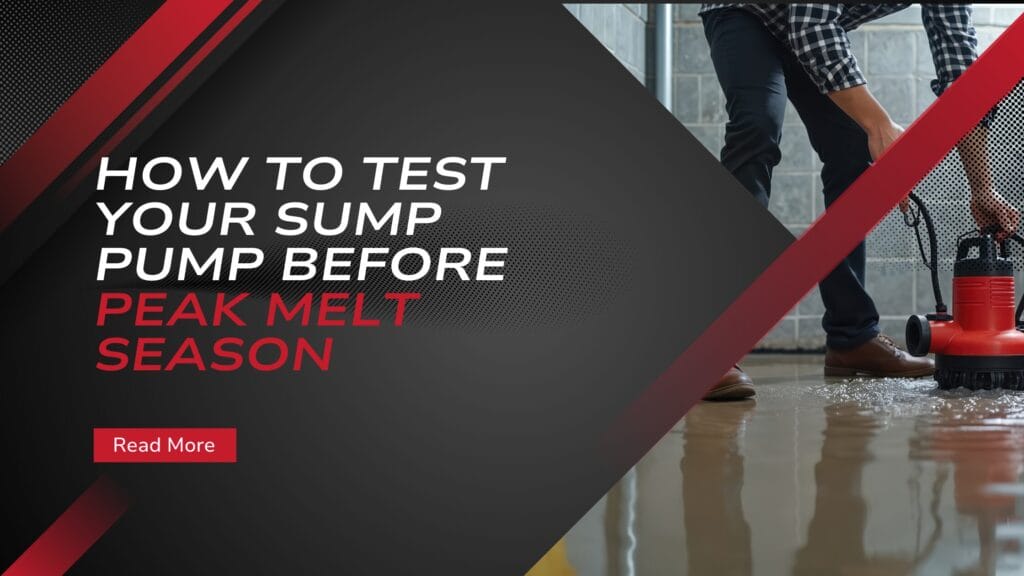
This is the most reliable way to test the full system. Slowly pour a bucket of water into the sump pit, enough to raise the water level and trigger the float switch. The pump should kick on within a few seconds and clear the water out quickly.
Watch for how fast the water drains, whether the pump shuts off automatically once the water is gone, and whether you hear any unusual sounds during operation.
Step 5: Check the Discharge Line
While the pump is running, go outside and find where the discharge line exits your home. Water should be flowing out clearly and away from your foundation. If nothing is coming out or the flow seems weak, you may have a clog or a frozen discharge line. This is a common issue in northern climates and is worth addressing before the melt season.
Also, make sure the discharge line is directing water at least 10 feet away from your foundation. If it is emptying too close to the house that water can work its way right back into the pit.
Step 6: Listen and Watch
A healthy sump pump should run smoothly and quietly with a consistent hum. Make note of anything that seems off, including grinding, rattling, loud vibration, or the pump cycling on and off rapidly without clearing the water. These are all signs that something needs attention.
Sump Pump Failure Signs to Watch For
- Strange noises. Grinding, rattling, or loud humming during operation can indicate a damaged impeller, motor wear, or debris inside the pump.
- The pump runs constantly. If your pump is running nonstop without much water in the pit, the float switch may be stuck in the on position, or there may be a plumbing issue sending water continuously to the pit.
- The pump does not turn off after clearing the water. This points to a float switch problem and is a serious issue that will burn out your motor quickly.
- Slow or weak discharge. If water is draining slowly, it could mean the pump is underpowered for your pit, the discharge line is partially blocked, or the pump is near the end of its life.
- Visible rust or corrosion. Some surface rust is normal, but heavy corrosion on the pump body or connections can affect performance and reliability.
- The pit smells. A strong odor from the sump pit can indicate stagnant water, mold, or organic buildup that should be cleaned out before melt season.
- The pump is old. The average sump pump lasts 7 to 10 years. If yours is older than that and has not been serviced recently, this is the year to get it evaluated.
Do You Have a Backup Sump Pump?
If you do not have a battery backup sump pump, melt season is the time to seriously consider one. Primary sump pumps run on electricity, and power outages during storms are common. A battery backup unit kicks in automatically when the power goes out or when the primary pump cannot keep up with incoming water.
For homes in flood-prone areas of the Fargo and Grand Forks region, a backup pump is not a luxury. It is essential. Talk to our plumbing team about the right backup solution for your home.
When to Call a Professional
Some sump pump issues are easy to handle on your own. Others need a professional eye. Call a plumber if:
- The pump does not turn on at all during your test
- The float switch is not triggering the pump
- You hear grinding or see visible motor damage
- The discharge line is blocked and you cannot clear it
- The pump is more than 10 years old and is showing performance issues
- Your basement has flooded before and you want a professional assessment of your drainage system
At Precision, our plumbing team serves homeowners in Fargo, West Fargo, Grand Forks, and the surrounding areas. We can inspect your sump pump, test the full system, replace an aging unit, and help you figure out whether a backup pump makes sense for your home. We offer 24/7 emergency service, so if the melt hits before you are ready, we are here.
Frequently Asked Questions About Sump Pump Testing
How often should I test my sump pump?
At a minimum, test your sump pump once a year before peak melt season. If you live in an area with heavy spring flooding or if your pump runs frequently, testing it twice a year in spring and fall is a good habit.
How long should a sump pump last?
Most sump pumps last between 7 and 10 years with proper maintenance. If yours is in that range or older, have it professionally inspected before relying on it for another melt season.
What if my sump pit is dry when I go to test it?
A dry pit just means there has not been much groundwater recently. You can still test the pump by pouring water in manually as described in Step 4 above. This is the most reliable way to confirm that the pump and float switch are working properly.
Can I replace a sump pump myself?
Replacing a sump pump is a manageable DIY project for some homeowners, but getting the sizing right is important. An undersized pump will struggle during peak melt, and an oversized one will cycle too frequently and wear out faster. If you are not sure what size you need, it is worth having a plumber take a look before you buy.
What is the difference between a pedestal and a submersible sump pump?
A pedestal pump has the motor mounted above the pit on a long shaft. A submersible pump sits directly in the water inside the pit. Submersible pumps are quieter and more powerful for most residential applications. Pedestal pumps are easier to service but louder and generally not as effective for high water volumes.
Do Not Wait Until the Water Is Already Coming In
Spring melt season waits for no one, and a sump pump failure during peak runoff is one of the most stressful and expensive plumbing emergencies a homeowner can face. Five minutes of testing right now can save you thousands of dollars and a whole lot of headaches.
If your test reveals any problems or you just want peace of mind from a professional inspection, contact Precision today. We serve homeowners in Fargo, West Fargo, Grand Forks, and surrounding communities, and we are always ready to help you get ahead of the season.